NOTES & TIPS
(1) Jalapeños. If you’re sensitive to capsaicin, wear gloves while handling jalapeños, especially if you come into contact with the seeds or membranes. Even though jalapeños are the main ingredient and their seeds and membranes are kept intact, this dish is only mildly spicy, since the jalapeños are fried and not eaten raw.
(2) Oil For Frying. Select an oil that (a) has neutral flavor and (b) can be heated to at least 350 F without burning — see
Oil Smoke Points. Common frying oils include avocado oil, peanut oil, vegetable oil, canola oil, and sunflower oil. Note that you can re-use oil by filtering it through a fine-mesh strainer or coffee filter; I use the built-in oil filtration system in my T-fal deep fryer. In fact, re-used oil or a mix of old and new often results in crunchier fried foods due to broken-down oil making better contact with the food — see
Cooks Illustrated article.
(3) Almond Flour. I use almond flour that is blanched, which means the skins are taken off of the almonds, so that the resulting flour looks white. Don’t substitute with coconut flour or other flours, which vary in their absorbency.
(4) Parmesan Cheese. This is the kind of parmesan that has a sandy or almost powdery texture. Don’t use shredded cheese, which won’t stick as easily to the jalapeños.
(5) Paprika. This spice is included for a smokier breading, and to give a nice orange color to the fried jalapeños.
(6) Tray With Parchment Paper. This is useful so that you can bread all of the jalapeños at once. I use a baking half sheet. Wax paper or other nonstick surface also works for lining. You can skip this step if you plan to place each breaded jalapeño slice directly into the hot oil right after breading — it just makes it harder to keep track of how long each jalapeño slice has been frying, since you’re not putting them in simultaneously.
(7) Breading Tips. To make the breading process less messy, use one hand for touching the breading and the other hand for touching the egg wash; only one hand per bowl. To coat, flip the jalapeño slice a few times in the bowl until it’s coated on all sides, lift up, and let the excess drip away (for egg wash) or shake off excess (for breading). When coating with breading, place the jalapeño slice in the breading bowl and first scoop some breading on top of it so that you don’t have to touch the jalapeño while flipping.
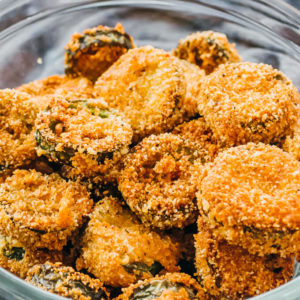
(8) Frying Jalapeños. Halfway through frying, you may need to flip the jalapeño slices for even frying if they’re not fully submerged in the hot oil. Work in batches as needed to avoid overcrowding. Once fried, be gentle while handling the jalapeño slices to avoid disturbing the crisp breading. Deep frying or shallow frying the jalapeños in a pot or skillet on the stovetop is ideal for a crunchy exterior — other methods like baking in the oven or cooking in an air fryer will yield less crisp results.
(9) Serving. Serve promptly while hot and crispy; leftovers don’t keep well because the breading loses its crunchiness over time. Serve with dips on the side, like keto
BBQ sauce, buffalo sauce, ranch dip, or sour cream dip. Don’t toss the fried jalapeños in any kind of sauce because the breading will turn soggy. You can also enjoy fried jalapeños by adding them to salads (like
southwest salad or
avocado bacon chicken salad), burgers, or
pizza.
(10) Nutrition. The estimate assumes all of the egg wash and breading ingredients are consumed. Oil used for frying is not included in the estimate.